
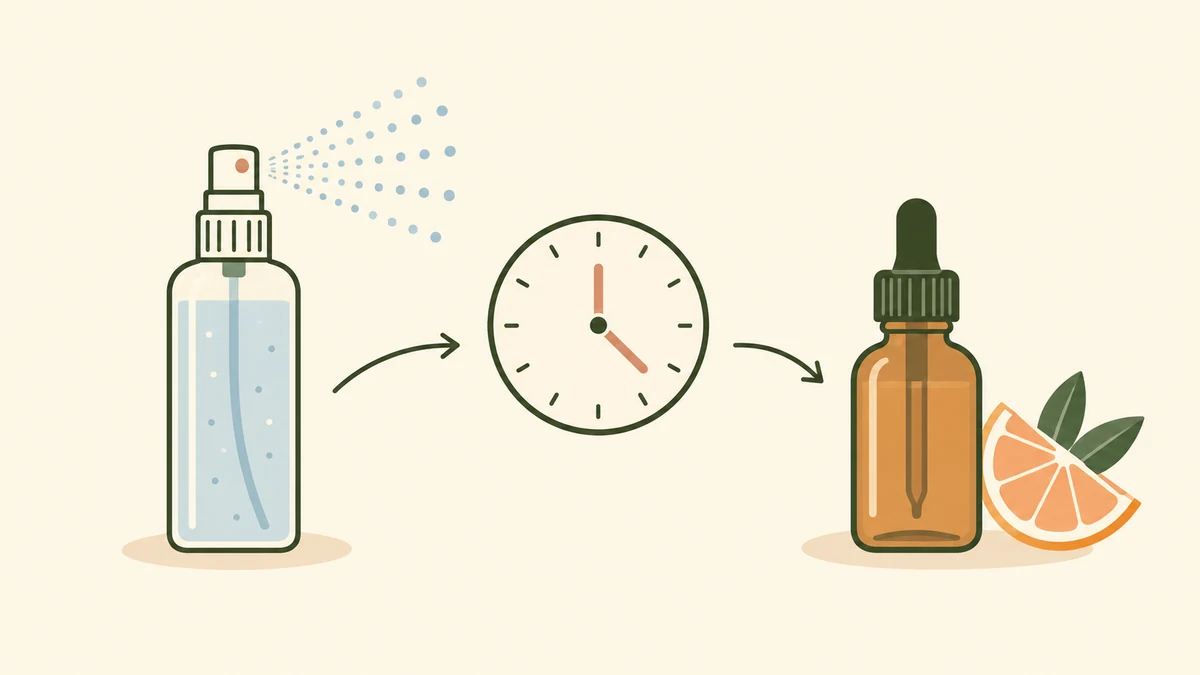
You can use hypochlorous acid and vitamin C on the same day, but do not mix them or spray HOCl directly over a fresh vitamin C layer. Hypochlorous acid is an oxidant, while vitamin C is an antioxidant, and laboratory research shows that HOCl reacts rapidly with ascorbate. The easiest routine is vitamin C in the morning and HOCl later, such as after exercise or in the evening. If you use both in one routine, apply HOCl first and wait until the skin is fully dry, but understand that no clinical trial has established an exact safe waiting time.
Why might HOCl and vitamin C interact?
Hypochlorous acid, usually shortened to HOCl, is a reactive oxidizing and chlorinating molecule. Immune cells produce it as part of the response to microbes. Stabilized topical formulas use low concentrations in carefully controlled water-based systems, and their activity depends on factors such as pH, concentration, packaging, and stability.3
Vitamin C is an antioxidant. In skincare, the best studied form is L-ascorbic acid, although labels also use derivatives such as sodium ascorbyl phosphate, magnesium ascorbyl phosphate, ascorbyl glucoside, and tetrahexyldecyl ascorbate. Topical vitamin C can support photoprotection, pigmentation care, and signs of photoaging, but stability and skin delivery are continuing formulation challenges.4
The chemical concern is straightforward. Laboratory kinetics research found that HOCl reacts very rapidly with ascorbate.1 Other experiments show vitamin C can protect biological molecules by reacting with HOCl and related chloramines.2 In the body, that scavenging behavior can be useful. In a skincare routine, it means the two ingredients may consume each other when mixed together while still wet.
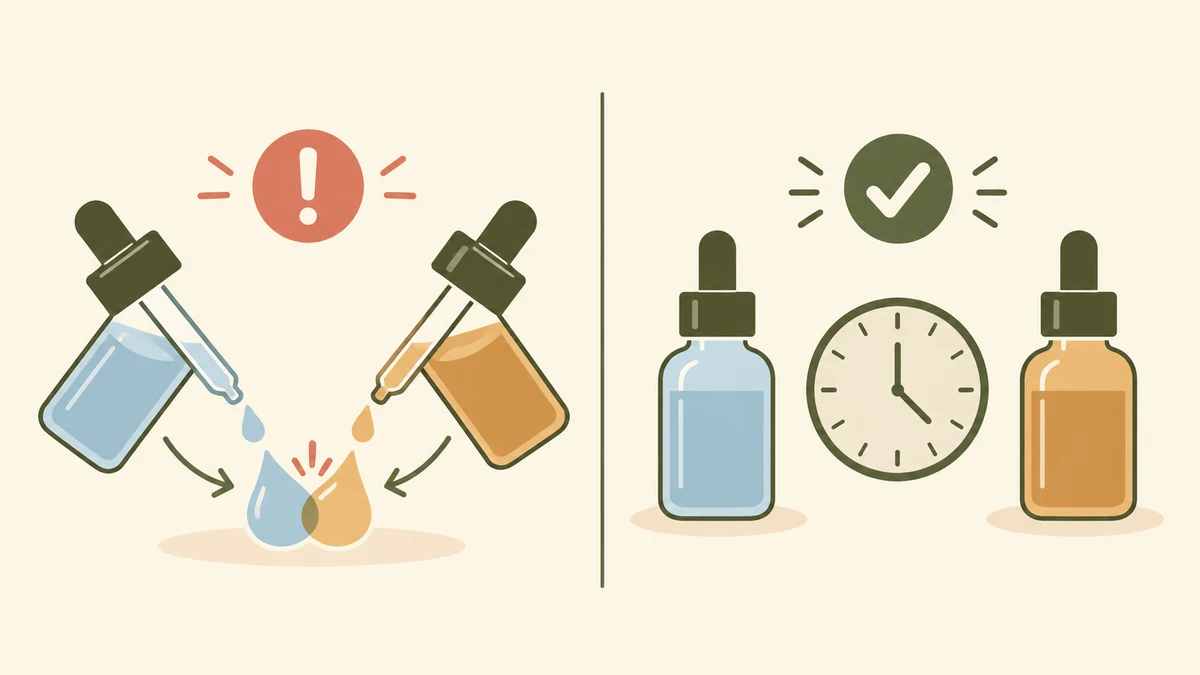
We found chemical research showing that HOCl and ascorbate react in solution. We did not find a controlled human facial study comparing vitamin C performance after 1, 5, 10, or 30 minutes of waiting after a cosmetic HOCl spray. Chemistry supports separating the wet layers, but it cannot supply a clinically proven timer.
Is using HOCl with vitamin C dangerous?
There is no good evidence that normal use of two correctly formulated skincare products creates a dangerous reaction on the face. The practical concern is loss of activity, not the creation of a toxic skincare combination. You might use up some HOCl, some vitamin C, or both before either product performs as intended.
Irritation is a separate issue. L-ascorbic acid serums are often formulated at a low pH to improve stability and penetration, and they can sting sensitive or barrier-damaged skin. A sting after layering does not prove HOCl created a harmful compound. It may simply mean your vitamin C formula is too acidic for your current skin.
| Claim | What the evidence supports |
|---|---|
| HOCl and vitamin C create a dangerous toxin | Not established with normal cosmetic use. |
| HOCl can react with L-ascorbic acid | Yes. Rapid reaction is supported by solution chemistry. |
| Waiting exactly 30 minutes prevents every interaction | Not proven in a facial skincare trial. |
| Vitamin C must be abandoned if you use HOCl | No. Separate them by routine or time of day. |
| HOCl makes vitamin C work better | Not established. |
The easiest hypochlorous acid and vitamin C routine
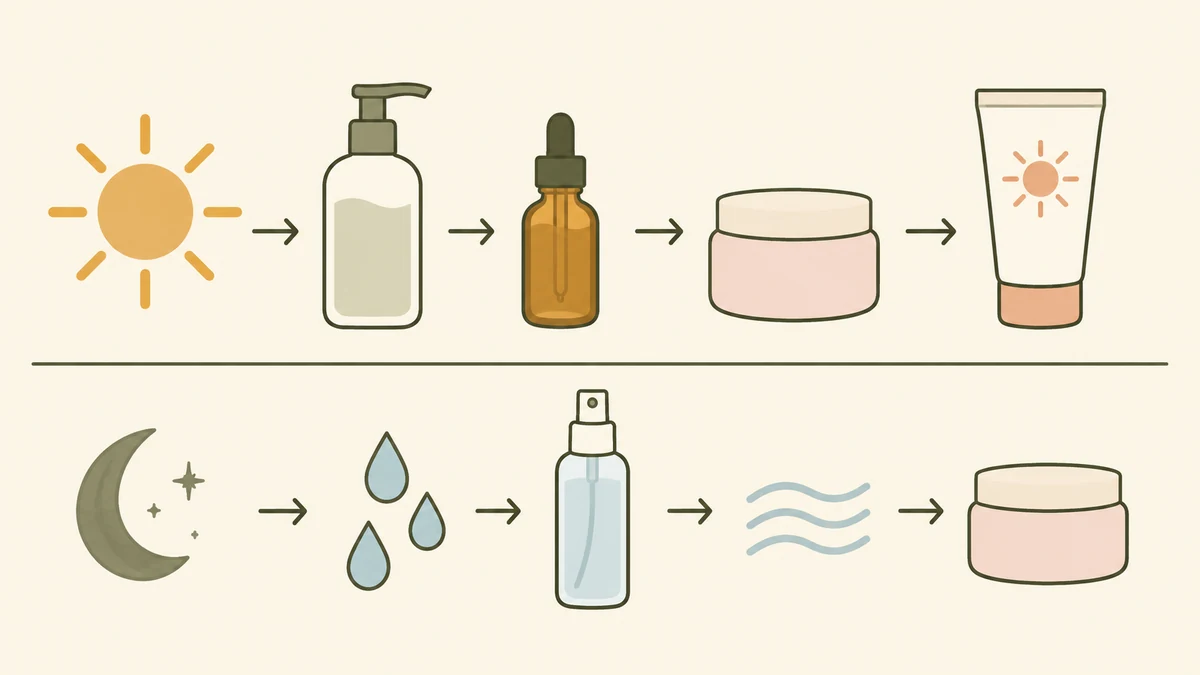
Option 1: Separate them by time of day
Morning: gentle cleanse or rinse, vitamin C serum, moisturizer if needed, then broad-spectrum sunscreen.
Later or evening: cleanse or rinse away sweat and sunscreen as needed, spray HOCl according to its label, let it dry, then moisturize.
This is the cleanest option because the products never meet as fresh wet layers. It also lets you use HOCl when people often want it most, such as after exercise, commuting, or removing a sweaty face covering.
Option 2: Use both in one routine
- Cleanse gently.
- Apply HOCl as directed.
- Let the skin dry completely.
- Apply vitamin C.
- Follow with moisturizer and morning sunscreen.
This order reduces direct dilution and mixing, but it does not guarantee zero chemical interaction. If preserving an expensive vitamin C serum matters to you, use the separate-time option.
What not to do
- Do not mix HOCl and vitamin C together in your palm.
- Do not decant both into the same spray bottle.
- Do not spray HOCl over a freshly applied vitamin C serum.
- Do not keep adding layers because social media calls both ingredients essential.
- Do not use household disinfectant, bleach, or pool products on your face. Use only a topical product labeled for skin.
How long should you wait after hypochlorous acid?
There is no evidence-based universal number. "Wait until completely dry" is a practical minimum, not a proven compatibility threshold. Drying reduces the shared water phase where direct mixing is easiest. It does not tell us exactly how much active HOCl remains on skin or how much vitamin C activity is preserved.
HOCl is reactive and naturally loses activity as it encounters light, heat, organic material, and other reactive molecules. Product-specific concentration, pH, spray amount, and packaging also matter.36 A confident rule such as "five minutes always works" goes beyond available research.
Use HOCl and vitamin C in separate routines while you test tolerance. Stop the newest product if you develop persistent burning, redness, itching, swelling, or a rash. Simplify to gentle cleansing, moisturizer, and sunscreen until your skin is calm.
What about vitamin C derivatives?
Vitamin C derivatives are designed to change properties such as stability, solubility, penetration, or tolerability. They are not chemically identical to L-ascorbic acid, and evidence for their conversion and clinical performance varies.7
It would be an overreach to say every derivative reacts with HOCl at exactly the same rate as free ascorbate. It would also be an overreach to promise complete compatibility without product testing. The conservative advice stays the same: avoid mixing the products while wet and separate them when convenient.
Does vitamin C still work if you use it in the morning?
Yes. Topical vitamin C is commonly used in morning routines under sunscreen because it can add antioxidant support. A six-month randomized, double-blind study of a 5% vitamin C cream found improvement in several features of photoaged skin compared with the vehicle.5 Vitamin C does not replace sunscreen, and the result from one tested cream cannot be assigned to every serum.
Frequently asked questions
Does hypochlorous acid deactivate vitamin C?
HOCl reacts rapidly with ascorbate in laboratory solutions, so direct wet mixing may reduce activity. How much this changes performance on facial skin has not been measured in a controlled routine trial.
Should HOCl go before or after vitamin C?
If you insist on one routine, use HOCl first and let it dry completely. The more reliable option is vitamin C in the morning and HOCl later.
Can I spray HOCl over vitamin C during the day?
That can re-wet the layer and bring the ingredients into contact. If you want a midday HOCl spray, rinse or cleanse first when practical, or reserve it for a different time.
Can I use HOCl with vitamin C every day?
Potentially, if both products suit your skin and you separate them. Daily use is not required, and product label directions take priority.
Can I use HOCl with vitamin C and retinol?
Yes, but a simple schedule is easier to tolerate: vitamin C in the morning, HOCl after a later cleanse or workout, and retinol in the evening after skin is dry. Introduce one product at a time.
Continue reading
Sources
- Folkes LK, Candeias LP, Wardman P. Kinetics and mechanisms of hypochlorous acid reactions. Archives of Biochemistry and Biophysics. 1995;323(1):120-126. PubMed.
- Carr AC, Tijerina T, Frei B. Vitamin C protects against and reverses specific hypochlorous acid- and chloramine-dependent modifications of low-density lipoprotein. Biochemical Journal. 2000;346(Pt 2):491-499. PubMed.
- Del Rosso JQ, Bhatia N. Status report on topical hypochlorous acid: clinical relevance of specific formulations, potential modes of action, and study outcomes. Journal of Clinical and Aesthetic Dermatology. 2018;11(11):36-39. PubMed.
- Al-Niaimi F, Chiang NYZ. Topical vitamin C and the skin: mechanisms of action and clinical applications. Journal of Clinical and Aesthetic Dermatology. 2017;10(7):14-17. PubMed Central.
- Humbert PG, et al. Topical ascorbic acid on photoaged skin: clinical, topographical and ultrastructural evaluation. Experimental Dermatology. 2003;12(3):237-244. PubMed.
- Haralović V, et al. Hypochlorous acid: clinical insights and experience in dermatology, surgery, dentistry, ophthalmology, rhinology, and other specialties. Biomedicines. 2025;13(12):2921. PubMed Central.
- Enescu CD, Bedford LM, Potts G, Fahs F. A review of topical vitamin C derivatives and their efficacy. Journal of Cosmetic Dermatology. 2022;21(6):2349-2359. PubMed.
Medical note: This article is educational. Ask a dermatologist about persistent irritation, eczema, rosacea, severe acne, or skincare used around a medical procedure.
Research first. Routine drama never. ♡