
Yes, Garnier Vitamin C Fresh and Bright Hydrating Sorbet Cream is a daily facial moisturiser. Our formula-review verdict is 6/10: it is a good-value, lightweight option for many normal, combination, and oily skin types, but its denatured alcohol and added fragrance make it a weaker choice for dry, reactive, eczema-prone, or fragrance-sensitive skin.
The UK 85 ml formula sells for around £7.50 and combines glycerin, niacinamide, and ascorbyl glucoside with oil-absorbing silica. This review starts with the practical verdict, then checks the full INCI list and Garnier's hydration, brightening, and oil-control claims.
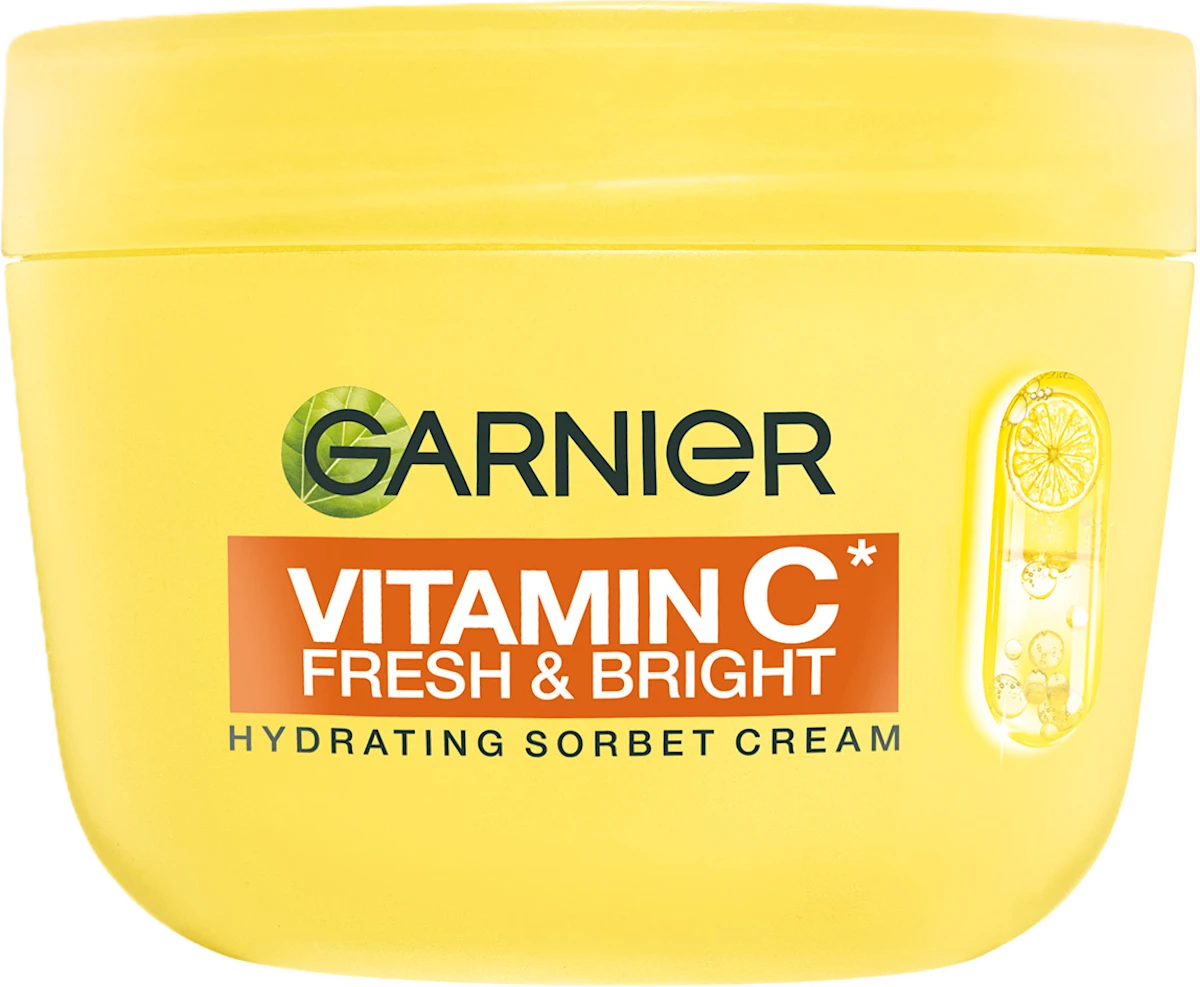
Vitamin C Fresh and Bright Hydrating Sorbet Cream
Garnier • UK 85 ml formula
Useful brightening and hydrating ingredients at a budget price, with real trade-offs from denatured alcohol, fragrance, and a lightweight base that may not be enough for dry skin.
Yes. Garnier sells it as a daily hydrating facial moisturiser.
Normal, combination, and oily skin that tolerates fragrance.
Alcohol Denat. is fourth in the UK INCI, and the formula contains parfum and fragrance allergens.
Very dry, reactive, eczema-prone, rosacea-prone, or fragrance-sensitive skin.
This is a formula-based editorial review using the official ingredient list, public brand claims, and scientific or regulatory sources. It is not a controlled long-term wear test or medical advice. Texture, pilling, irritation, and results can differ by skin and routine.
This article evaluates the UK 85 ml version, whose official listing describes a combined 4% niacinamide and vitamin C derivative blend. Garnier India's current page describes a different 4.5% formula with hyaluron and BHA, and its INCI list is not identical. Use the ingredient panel on your own jar as the final reference. [8, 9]
Is Garnier Vitamin C Sorbet Cream a Moisturiser?
Yes. It is a leave-on facial moisturiser, not a serum, sunscreen, or treatment cream. Garnier instructs users to apply it after serum and before sunscreen. The sorbet label describes its light gel-cream texture; it does not change the product category.
Good actives at a budget price. But fragrance and alcohol are real trade-offs.
Not a problem for every skin type. But worth knowing before you buy.Garnier Vitamin C Sorbet Cream Review: Is It Good?
It is good for the right user rather than universally good. The formula delivers lightweight hydration and a matte-leaning finish at a low price, but it prioritizes fast absorption and fragrance over a richer, fragrance-free barrier-support profile. The claim-by-claim review below explains where the formula is convincing and where the marketing runs ahead of the available evidence.
| Claim | Honest read |
|---|---|
| Up to 48-hour hydration | Based on Garnier's own small studies (40 and 24 subjects). Glycerin is a well-established humectant with strong independent evidence for skin hydration. The 48-hour figure is plausible for some skin types but likely optimistic for dry skin in low-humidity conditions, where a heavier occlusive would be needed to sustain long-term moisture retention. |
| Reduces dark spots by 47% in 1 week | This figure comes from a single brand-funded study of 51 volunteers (Australian site) with no independent replication. Niacinamide has solid published evidence for reducing hyperpigmentation over time, but a 47% reduction in one week is a marketing-level claim, not an independently verified result. |
| 4% Vitamin C + Niacinamide | Garnier confirms the 4% refers to the combined total of both actives. The exact individual split is not disclosed. The vitamin C used is ascorbyl glucoside, a derivative produced via a biotechnological process using renewable sources such as corn and wheat. This is not the same as unstabilised ascorbic acid, and calling it simply "vitamin C" understates that distinction. |
| All-day oil control | The formula contains silica (which absorbs surface oil and creates a matte finish) and a low concentration of salicylic acid. These can reduce shine, particularly early in the day. The claim is plausible but there is no independent clinical data to support "all-day" duration. |
| Suitable for sensitive skin | The formula contains denatured alcohol, parfum, and declared fragrance allergens including limonene, linalool, and citral. That does not mean every sensitive user will react, but it makes the product a less conservative choice than a fragrance-free moisturiser for reactive skin. |
| Cruelty-free and vegan | Accurate. Garnier is certified by Cruelty Free International. No animal-derived ingredients appear in the INCI list. |
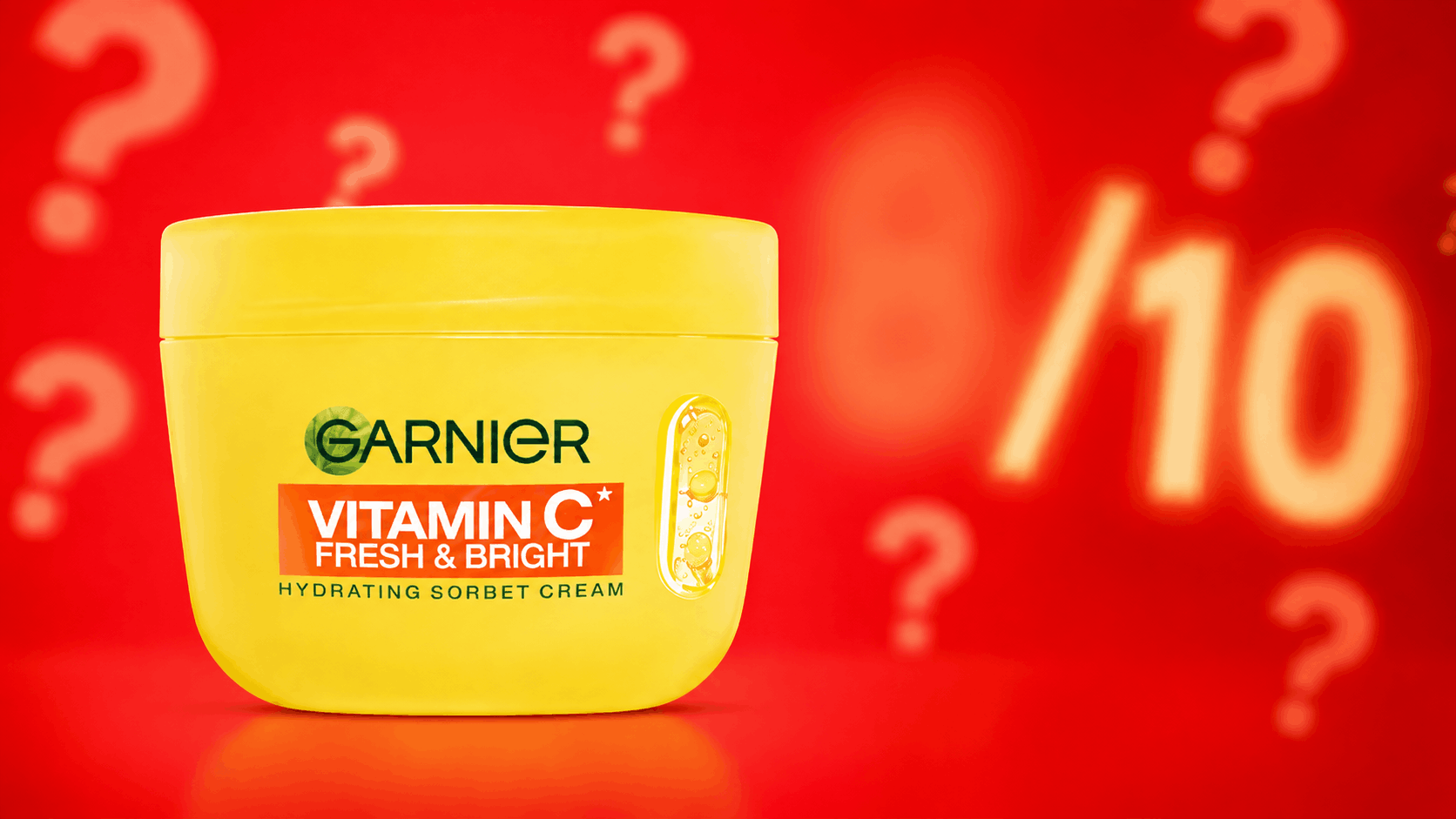
Garnier Vitamin C Sorbet Cream Ingredients & INCI.
The full official UK INCI list is: Aqua, Glycerin, Niacinamide, Alcohol Denat., Cetearyl Isononanoate, Sodium Carbomer, Citrus Limon Fruit Extract, Sodium Hydroxide, Silica, Silica Silylate, Ascorbyl Glucoside, Caprylyl Glycol, Trisodium Ethylenediamine Disuccinate, Xanthan Gum, Polyglyceryl-2 Isostearate, Salicylic Acid, Chlorphenesin, CI 15510, CI 19140, Linalool, Linalyl Acetate, Geraniol, Pinene, Limonene, Citral, Tetramethyl Acetyloctahydronaphthalenes, Citrus Aurantium Peel Oil, Citrus Limon Peel Oil, Carvone, Parfum. [9]
The most evidence-backed active in this formula. Niacinamide works by inhibiting the transfer of melanosomes (pigment-containing structures) from melanocytes to skin cells, which reduces the visible appearance of uneven tone over time. It also increases ceramide synthesis, supporting the skin barrier, and has mild sebum-regulating and anti-inflammatory properties. A randomised controlled trial by Navarrete-Solis et al. (2011) found that a 4% niacinamide cream produced good-to-excellent improvement in 44% of melasma patients over eight weeks. The total active blend here is 4% combined with the vitamin C derivative, so the individual niacinamide concentration is not confirmed, but even at lower amounts it contributes meaningfully to barrier and brightening goals. [1, 2]
This is the vitamin C form used in the UK formula. Ascorbyl glucoside is a more stable vitamin C derivative that can act as a longer-term source of ascorbic acid in skin. A study of a commercial 1.8% ascorbic acid 2-glucoside formula found longer-lasting antioxidant activity than the comparison ascorbic-acid formula, but evidence for this derivative is still less extensive than the evidence for well-formulated pure ascorbic acid. Garnier does not disclose the percentage of ascorbyl glucoside in this moisturiser. [3]
Glycerin is one of the most well-studied and reliable humectants in skincare. It draws water into the outer layers of the skin and helps maintain the healthy lipid structure between skin cells. Clinical research consistently shows it improves hydration at concentrations from around 3% upwards. The Cosmetic Ingredient Review Expert Panel has assessed it as safe for cosmetic use. It is a foundational reason this moisturiser actually works. [4]
These mineral-derived powders create the signature sorbet texture by absorbing surface oil and giving a soft, velvety, matte finish. They do not penetrate the skin and provide no biological skincare benefit, but they are important for the non-greasy feel the brand promises and they deliver on that.
Listed towards the end of the INCI, which suggests a low concentration, likely used here partly as a preservative. Salicylic acid is a beta hydroxy acid (BHA) that can dissolve the bonds between dead skin cells and has mild anti-comedogenic and anti-inflammatory properties. At the concentration present here, the effect on pores and texture is likely minor but is a genuine contribution to the "oil control" story alongside the silica. [5]
Ingredients Worth Knowing About.
These are not necessarily reasons to avoid the product, but they are worth understanding, particularly if your skin is reactive.
This is the fourth ingredient in the UK list, so it appears before many of the texture agents and supporting ingredients; the exact percentage is not disclosed. Denatured alcohol helps create a light, fast-absorbing feel. Repeated exposure can be drying or irritating for some people, particularly when the barrier is already compromised, although tolerance depends on the finished formula and the individual user. [6]
The UK formula contains parfum plus declared fragrance components including limonene, linalool, citral, geraniol, linalyl acetate, carvone, and pinene. It also lists lemon and orange peel oils. Fragrance contact allergy is well documented, so users with known fragrance allergy or very reactive skin have a clearer reason to choose a fragrance-free moisturiser. The ingredient list alone cannot predict whether everyone else will react. [7]
This product contains fragrance. Some sources have described it as fragrance-free, which is incorrect. Parfum is listed as an ingredient, and multiple individually named fragrance allergens appear on the INCI. If you need a genuinely fragrance-free moisturiser, this is not it.
Who Is This Best For?
Normal and combination skin looking for a lightweight daily moisturiser with brightening actives at a budget price.
Oily skin. The silica-based matte finish and niacinamide's mild sebum-regulating effect make it a reasonable choice for those who want hydration without a greasy feel.
Hyperpigmentation and uneven tone goals. Niacinamide and ascorbyl glucoside both target pigmentation through different mechanisms, and this is one of the most affordable ways to get both in one formula.
Dry skin, especially in cold or low-humidity environments. The formula lacks heavy occlusives, and the alcohol content may contribute to moisture loss. You may need a richer cream on top at night.
Sensitive, reactive, eczema-prone, or rosacea-prone skin. The fragrance components and denatured alcohol are well-documented irritants for these skin types. A fragrance-free, alcohol-free moisturiser is a safer choice.
Anyone looking for an all-in-one daytime SPF. This is a moisturiser only and provides no UV protection, so sunscreen remains a separate step.
Transparency Notes.
A few things worth saying clearly.
- The "48-hour hydration" varies by region. The UK and some international listings say 48 hours, while other regional sites have stated 24 hours. Both figures come from Garnier's own small studies. Independent long-duration hydration data for this formula is not available.
- The vitamin C is a derivative, not pure ascorbic acid. Ascorbyl glucoside is a real and useful ingredient, but it behaves differently to pure vitamin C. Garnier uses an asterisk notation to clarify this on pack, but not all third-party listings carry that detail clearly.
- The "4% active blend" is a combined figure. The exact split between niacinamide and ascorbyl glucoside is not publicly disclosed. This makes it impossible to verify whether each individual active reaches concentrations that match the published efficacy studies.
- Sensitive skin suitability is overstated. The label says "suitable for all skin types, including sensitive skin." The ingredient list does not support that claim for reactive, fragrance-sensitive, or eczema-prone users.
How to Use It Properly.
Apply it after water-based serums and before sunscreen in the morning. A separate broad-spectrum sunscreen is especially important in any routine focused on dark spots or uneven tone because this moisturiser provides no UV protection.
Niacinamide pairs well with most other actives, including hyaluronic acid, peptides, and AHAs. If you are using a vitamin C serum underneath, be aware that the ascorbyl glucoside in this cream adds to your total vitamin C load, which is not a concern for most people but is worth noting if your skin is reactive to high active concentrations.
A pea-to-nickel-sized amount is sufficient for the face. Because it absorbs quickly, it works as a last moisturiser step before sunscreen without pilling issues for most users.
This product contains no UV protection. Despite being positioned around brightening and radiance, there is no SPF. Given that UV exposure is the primary driver of photodamage and hyperpigmentation, always apply a separate broad-spectrum sunscreen on top when going outdoors.
Final Verdict.
The Garnier Vitamin C Sorbet Cream delivers genuinely useful actives at a price that is difficult to match. Niacinamide, glycerin, and ascorbyl glucoside are all evidence-backed ingredients for hydration and brightening, and at around £7.50 for 85 ml, the value per millilitre is hard to argue with.
The limitations are real but specific. Denatured alcohol appears high in the UK ingredient list, and the added fragrance makes this a less conservative choice for sensitive, eczematous, rosacea-prone, or fragrance-allergic skin. The brand's claims around hydration duration and dark spot reduction rely on proprietary studies, so they should be treated as directional rather than independently confirmed results.
A solid budget moisturiser for normal, oily, and combination skin. The active blend is genuine and the price is genuinely good. It is not a great fit for sensitive or dry skin, and the marketing overstates both the gentleness and the clinical evidence behind some of its bigger claims. Use it with realistic expectations and always follow with SPF.
Garnier Vitamin C Sorbet Cream FAQ.
Is Garnier Vitamin C Sorbet Cream a moisturiser?
Yes. It is a lightweight daily facial moisturiser. It goes after serum and before sunscreen in a morning routine.
Is Garnier Vitamin C Sorbet Cream good?
It is a good-value option for many normal, combination, and oily skin types that enjoy fragranced skincare. It is less suitable for very dry, reactive, or fragrance-sensitive skin because the UK formula contains denatured alcohol and parfum.
Does Garnier Vitamin C Sorbet Cream contain fragrance and alcohol?
Yes. The official UK INCI lists Alcohol Denat. fourth and includes parfum plus declared fragrance components such as limonene, linalool, and citral.
Are all regional Garnier Vitamin C Sorbet Cream formulas the same?
No. The current UK and India product pages describe different active blends and show different ingredient lists. Check the ingredient panel on your own jar before use.
With love,
Stylishandhealthy
This post is for informational purposes only and does not constitute medical advice. Individual skin reactions vary. If you have a skin condition, a history of contact allergy, or are pregnant or breastfeeding, consult a qualified healthcare professional before adding new products to your routine. We only recommend or review products based on our honest assessment. Any affiliate links on this site are always disclosed.
Sources
- [1] Navarrete-Solis J, Castanedo-Cazares JP, Torres-Alvarez B, Oros-Ovalle C, Fuentes-Ahumada C, Gonzalez FJ, Martinez-Ramirez JD, Moncada B. A double-blind, randomized clinical trial of niacinamide 4% versus hydroquinone 4% in the treatment of melasma. Dermatol Res Pract. 2011;2011:379173. PMID: 21822427. PMCID: PMC3142702. doi: 10.1155/2011/379173. PubMed
- [2] Boo YC. Mechanistic basis and clinical evidence for the applications of nicotinamide (niacinamide) to control skin aging and pigmentation. Antioxidants (Basel). 2021 Aug 21;10(8):1315. PMID: 34439563. PMCID: PMC8389214. doi: 10.3390/antiox10081315. PMC full text
- [3] Hakozaki T et al. Ascorbic acid 2-glucoside: an ascorbic acid pro-drug with longer-term antioxidant efficacy in skin. Int J Cosmet Sci. 2022;44(1):25-35. PMID: 34679221. doi: 10.1111/ics.12745. PubMed
- [4] Fluhr JW, Darlenski R, Surber C. Glycerol and the skin: holistic approach to its origin and functions. Br J Dermatol. 2008;159(1):23-34. PMID: 18510666. doi: 10.1111/j.1365-2133.2008.08643.x. PubMed
- [5] Cosmetic Ingredient Review Expert Panel. Safety assessment of salicylic acid, salicylate salts, and related esters as used in cosmetics. Int J Toxicol. 2019;38(3_suppl):5S-108S. doi: 10.1177/1091581819876648. CIR Report (PDF)
- [6] Lachenmeier DW. Safety evaluation of topical applications of ethanol on the skin and inside the oral cavity. J Occup Med Toxicol. 2008;3:26. PMCID: PMC2596110. doi: 10.1186/1745-6673-3-26. PMC full text
- [7] Johansen JD. Fragrance contact allergy: a clinical review. Am J Clin Dermatol. 2003;4(11):789-798. PMID: 14572300. doi: 10.2165/00128071-200304110-00006. PubMed
- [8] Garnier India. Vitamin C Fresh and Bright Sorbet Cream: official product information and regional ingredient list. garnier.in
- [9] Garnier UK. Vitamin C Fresh and Bright Hydrating Sorbet Cream: official product information and regional ingredient list. garnier.co.uk