

Fiber has become the nutrient of the moment. Social media posts show giant bean bowls, chia puddings, high-fiber wraps, powders, and daily totals that sometimes reach 50, 60, or even 80 grams. The trend is called fibermaxxing, and its basic message sounds sensible: if fiber is healthy, eating more should make you healthier.
There is real science behind increasing fiber. Higher-fiber diets are associated with lower risks of cardiovascular disease, type 2 diabetes, colorectal cancer, and premature death.[1][3] Clinical trials also show benefits for constipation, cholesterol, and blood sugar control.[5][6][7]
But the research does not support turning fiber into a competition. There is no clinical protocol called fibermaxxing, and very high targets have not been proven superior for everyone. The largest benefits often come from moving from a low intake toward an adequate one, not from pushing the number as high as possible.
Fibermaxxing is useful when it means gradually reaching a healthy fiber intake from varied plant foods. It becomes less sensible when it means forcing extreme amounts, relying heavily on powders, or ignoring digestive symptoms. For many adults, about 25 to 38 grams per day is a reasonable evidence-based range. Your ideal amount may be lower or higher depending on your calorie needs, health, and tolerance.[2][4]
Strong evidence for adequate fiber, limited evidence for “maxxing”
Dietary fiber itself has a large evidence base. Extreme intake targets do not. The smartest version of the trend is to close your fiber gap slowly and consistently.
Bottom line: optimize fiber instead of maximizing it.
Table of Contents
- What fibermaxxing means
- Soluble, insoluble, viscous, and fermentable fiber
- What the research says about the benefits
- How much fiber you actually need
- Can too much fiber backfire?
- Who should be cautious
- How to increase fiber without bloating
- High-fiber foods that make the goal easier
- Do you need a fiber supplement?
- Fibermaxxing myths
- Final verdict
- FAQ
- Sources
What Is Fibermaxxing?
Fibermaxxing is an informal name for deliberately increasing dietary fiber, often by tracking grams and adding more beans, lentils, vegetables, berries, whole grains, seeds, or fiber-enriched products. Some people simply aim to meet recommendations. Others aim far above them.
The trend exists because many modern diets are low in intact plant foods. That means a person can eat enough calories while still getting very little fiber. In that context, paying attention to fiber can be genuinely useful.
The problem is the word maxxing. Nutrition rarely works as “more is always better.” Fiber is not one single substance, and different fibers behave differently in the gut. A number on an app also cannot tell you whether your diet is varied, whether you are tolerating it, or whether most of your fiber is coming from beans and berries or from several processed bars with added inulin.
The healthiest target is not the highest number you can tolerate. It is a consistent intake that improves your diet without making your digestive system miserable.
Stylish & Healthy verdictFiber Is More Complicated Than Soluble Versus Insoluble
Dietary fiber includes carbohydrates that are not fully digested and absorbed in the small intestine. Some pass into the large intestine, where they can add bulk, hold water, or be fermented by gut microbes.
Forms a gel
Psyllium, beta-glucan from oats and barley, and some pectins can thicken intestinal contents. This can help soften stool, slow glucose absorption, and reduce LDL cholesterol.
Adds structure and bulk
Wheat bran and the fibrous parts of vegetables can increase stool bulk and help movement through the digestive tract. They are not always well tolerated by people with sensitive bowels.
Feeds gut microbes
Inulin, fructans, resistant starch, and several fibers in legumes are fermented by bacteria. This can produce short-chain fatty acids, but it can also produce gas.
Often produces less gas
Psyllium is relatively slowly fermented and can be easier to tolerate than rapidly fermented fibers for some people. Individual responses still vary.
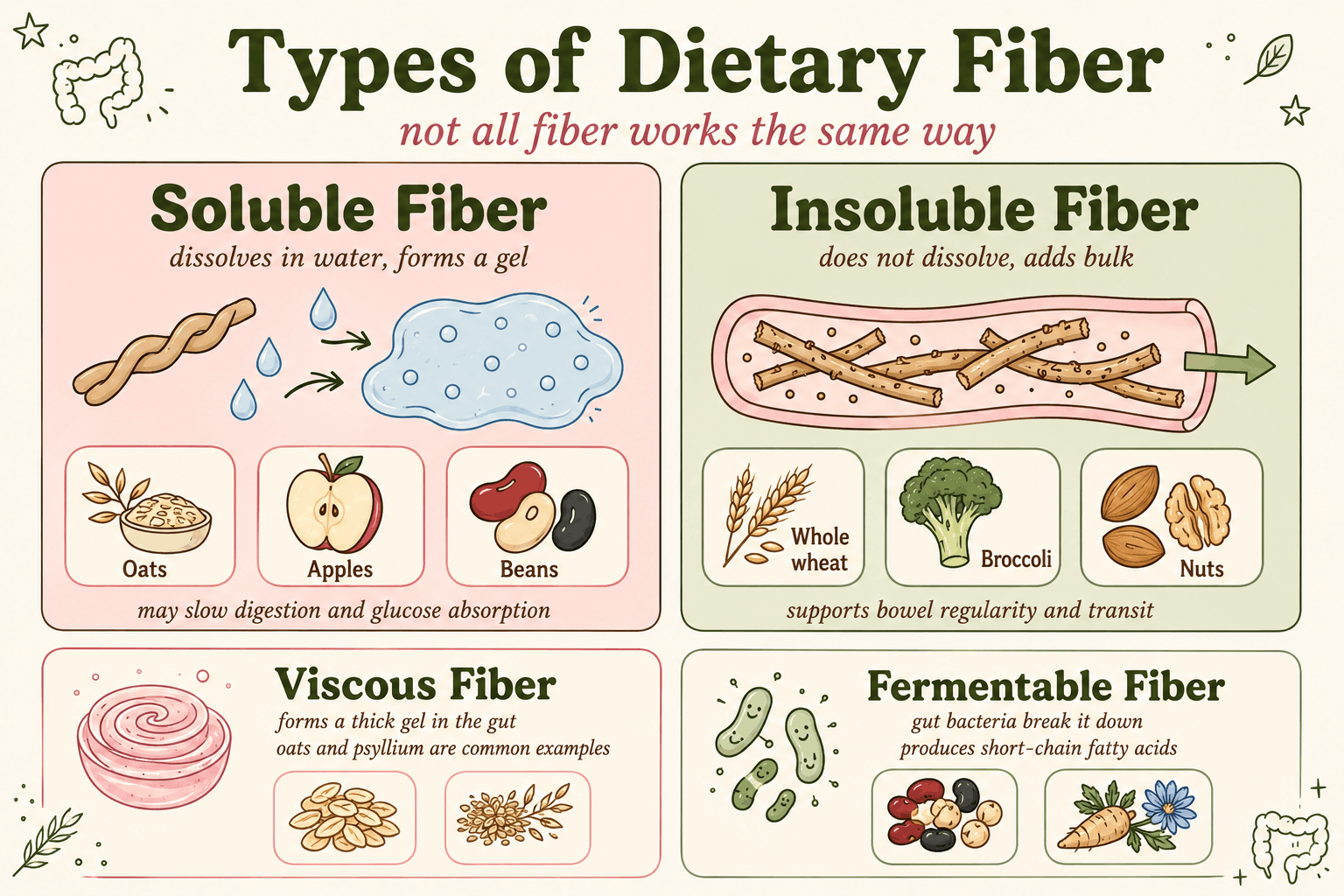
Fiber properties overlap. Whole plant foods usually contain a mixture rather than one perfectly isolated type.
What Does the Research Actually Support?
1. Better bowel regularity and constipation relief
This is one of the clearest practical benefits. A 2022 systematic review included 16 randomized controlled trials and 1,251 adults with chronic constipation. About 66% of participants responded to fiber treatment compared with 41% in control groups. Fiber also improved stool frequency and consistency. Psyllium and pectin showed particularly useful results, while flatulence was more common in the fiber groups.[5]
That does not mean every type of constipation should be treated by adding more roughage. Constipation can also be related to medications, pelvic floor dysfunction, low food intake, dehydration, neurological disease, obstruction, or other medical causes. New, severe, or persistent constipation needs more than a social media challenge.
2. Lower LDL cholesterol
Viscous soluble fibers can trap bile acids in the digestive tract. The liver then uses more cholesterol to replace them, which can reduce circulating LDL cholesterol. A meta-analysis of 28 randomized trials found that a median dose of about 10 grams of psyllium per day reduced LDL cholesterol by 0.33 mmol/L and also improved non-HDL cholesterol and apolipoprotein B.[6]
This is clinically useful, but it does not turn psyllium into a replacement for prescribed cholesterol treatment. It is one dietary tool within a broader plan.
3. Improved blood sugar control
Soluble fiber can slow the rate at which food leaves the stomach and reduce how quickly glucose reaches the bloodstream. In adults with type 2 diabetes, a meta-analysis of 29 randomized trials found improvements in HbA1c, fasting glucose, insulin resistance, and post-meal glucose with soluble fiber supplementation. The studies were heterogeneous, so the exact size of benefit is not guaranteed for every person.[7]
For someone taking insulin or glucose-lowering medication, a major diet change may also alter glucose patterns. Monitoring and professional guidance matter more than following a fixed online target.
4. Modest support for weight management
Fiber-rich foods can be filling because they add volume, hold water, and often take longer to eat. A 2022 meta-analysis of longer trials found that isolated soluble fiber produced about 1.25 kilograms more weight loss than control treatment in adults with overweight or obesity. Improvements in waist circumference and insulin-related markers were also reported.[8]
The effect is real but modest. Fiber does not override total calorie intake, appetite changes, sleep, activity, medications, hormones, or the food environment. “Fibermaxxing for weight loss” is oversold when it is presented as an effortless shortcut.
5. Changes in the gut microbiome
Many gut microbes use fermentable fiber as fuel. A systematic review and meta-analysis of 64 controlled studies found that fiber interventions increased Bifidobacterium and Lactobacillus abundance and slightly increased fecal butyrate compared with lower-fiber controls.[9]
That does not mean every high-fiber food creates the same microbiome or that more bacterial diversity automatically equals better health. Microbiome responses depend on the fiber type, dose, usual diet, and the microbes a person already has. The strongest practical advice is still variety rather than chasing one “prebiotic” ingredient.
6. Lower long-term risk of chronic disease
The landmark 2019 Lancet review combined 185 prospective studies with 58 clinical trials. Higher fiber intake was associated with lower risks of all-cause mortality, cardiovascular disease, stroke, type 2 diabetes, and colorectal cancer. The data supported a daily intake of about 25 to 29 grams, with possible further benefit at higher intakes.[1]
A 2025 umbrella review covering more than 17 million participants also found that most included meta-analyses linked higher fiber intake with lower disease risk. The authors rated the credibility differently across outcomes, which is important. “Associated with” is not the same as “guaranteed to prevent.”[3]
For colorectal cancer specifically, a dose-response meta-analysis found that each additional 10 grams of total dietary fiber per day was associated with about a 10% lower risk. The evidence was strongest for cereal fiber and whole grains.[10]
How Much Fiber Do You Actually Need?
There is no single perfect number for every body. Recommendations are usually based on age, sex, and energy intake.
| Group | Common daily target | Practical interpretation |
|---|---|---|
| Adult women, 19 to 50 | About 25 g | A useful baseline target, not a maximum. |
| Adult men, 19 to 50 | About 38 g | Higher mainly because average energy needs are higher. |
| Women over 50 | About 21 g | Needs usually fall with lower energy intake. |
| Men over 50 | About 30 g | Still achievable through ordinary plant foods. |
| Energy-based method | 14 g per 1,000 kcal | About 28 g on a 2,000 kcal diet. |
EFSA considers 25 grams per day adequate for normal bowel function in adults and notes that higher intakes from fiber-containing foods may provide additional health benefits.[2] U.S. reference values use about 14 grams per 1,000 calories, which produces the familiar targets of roughly 25 grams for many women and 38 grams for many men.[4]
There is no universally accepted line where a healthy intake becomes “too much.” Thirty-five or 45 grams can be comfortable and nutritious for one person and miserable for another. The evidence does not show that everyone needs 60 to 80 grams. Symptoms, food variety, medical history, and the way the fiber is introduced matter more than winning a number.
Can Too Much Fiber Backfire?
Yes, especially when intake rises quickly. Common effects include gas, bloating, abdominal pressure, cramps, loose stool, and sometimes worse constipation. Highly fermentable fibers can produce more gas because bacteria break them down rapidly. The constipation meta-analysis found significantly more flatulence with fiber than with control treatment.[5]
Fiber supplements can also swell when they absorb liquid. Psyllium should be taken exactly as directed and with enough fluid. MedlinePlus advises mixing a dose with about 240 milliliters of liquid and warns people with swallowing difficulty or intestinal blockage to seek medical advice before use.[13]
Severe abdominal pain, repeated vomiting, inability to pass stool or gas, significant abdominal swelling, blood in the stool, unexplained weight loss, or a sudden major change in bowel habits are not normal “gut adjustment.” Seek medical care.
Who Should Be Cautious With Fibermaxxing?
- People with IBS: Fiber type matters. The American College of Gastroenterology suggests soluble fiber, but not insoluble fiber, for global IBS symptoms. Rapidly fermentable fibers and large servings of certain high-fiber foods may worsen gas, bloating, or discomfort in some people.[11]
- People with Crohn’s disease, ulcerative colitis, or strictures: Fiber is not automatically forbidden, but symptomatic intestinal narrowing can make coarse, fibrous foods difficult to tolerate. Texture modification and individualized medical advice may be needed.[12]
- People at risk of bowel obstruction: Do not start a high-fiber challenge without clinician guidance.
- People with difficulty swallowing: Dry or insufficiently mixed psyllium can be dangerous.
- People taking medications: Psyllium can affect how some medicines are absorbed. Follow the product instructions and ask a pharmacist about timing.[13]
- People with persistent digestive symptoms: More fiber is not a substitute for finding the cause.
How to Increase Fiber Without Bloating
The digestive system usually handles a gradual change better than a sudden one. There is no research-proven rule that everyone must add exactly five grams per week, but small steps are a sensible way to identify your tolerance.
- Estimate your current intake. Track two or three normal days. This tells you whether you are starting at 10 grams or already near 30.
- Add one meaningful source at a time. Add berries to breakfast, beans to lunch, or a whole grain at dinner. Do not add chia, bran cereal, fiber wraps, inulin bars, and psyllium all on the same day.
- Spread fiber across the day. A 15-gram fiber bomb at one meal is more likely to cause symptoms than smaller amounts at several meals.
- Drink enough fluid. This is especially important with gel-forming supplements such as psyllium. Urine color, thirst, climate, exercise, and medical conditions all affect fluid needs.
- Cook and prepare foods differently. Cooked vegetables, canned lentils, oats, soups, and blended beans may be easier to tolerate than large raw salads and dry bran.
- Pause when symptoms become persistent. Reduce the newest addition, then try a smaller amount or a different fiber source.
High-Fiber Foods That Make the Goal Easier
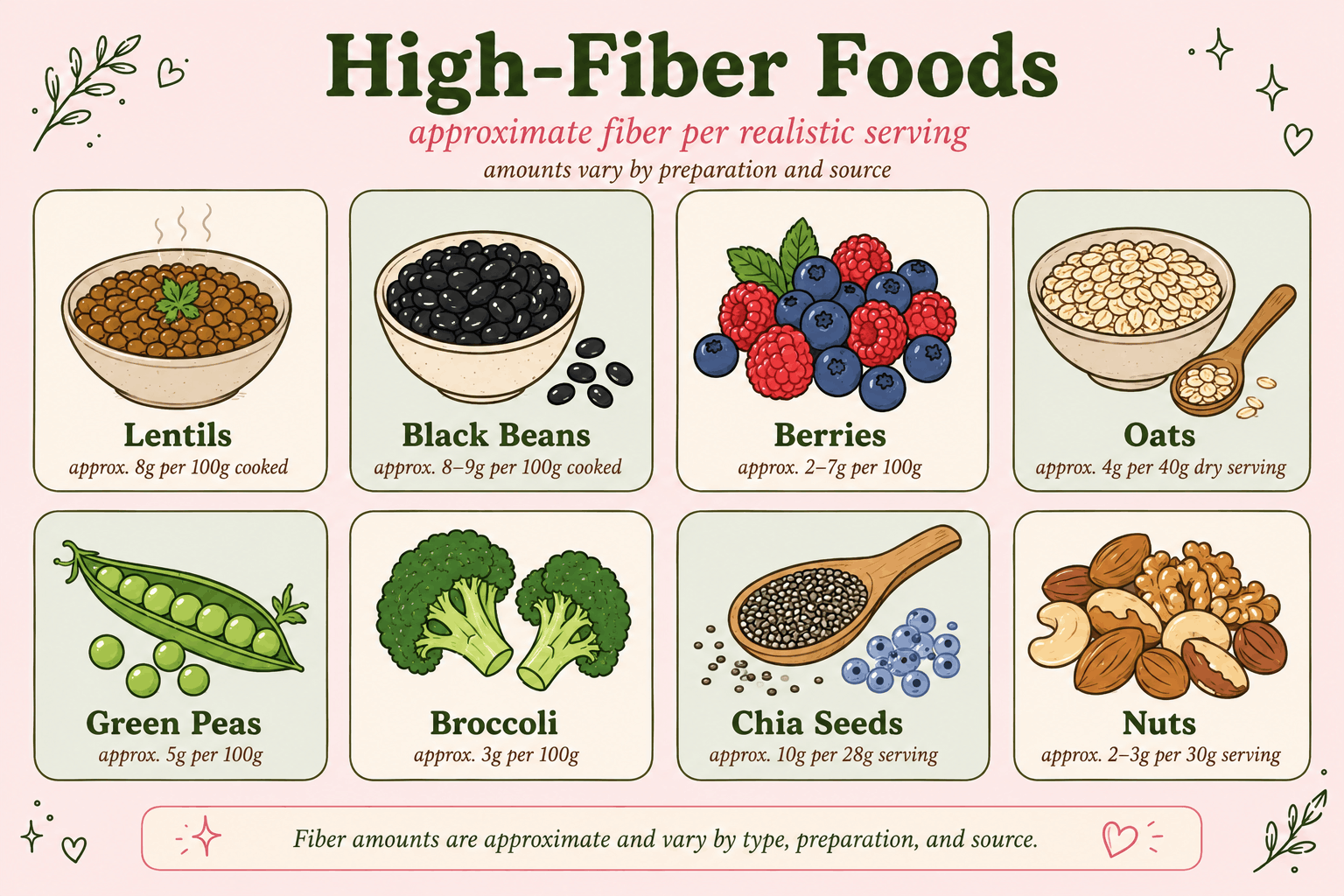
You do not need a shelf of special products. Legumes, fruit, vegetables, whole grains, nuts, and seeds can move the total quickly while also providing protein, minerals, vitamins, and plant compounds.
| Food | Serving | Approximate fiber | Easy use |
|---|---|---|---|
| Lentils, cooked | 1 cup | 15.5 g | Soup, salad, pasta sauce, curry |
| Black beans, cooked | 1 cup | 15 g | Bowls, tacos, chili |
| Chia seeds | 28 g | 10 g | Yogurt, oats, pudding |
| Green peas, cooked | 1 cup | 9 g | Soup, rice, side dish |
| Raspberries | 1 cup | 8 g | Breakfast, snack, dessert |
| Whole-wheat pasta | 1 cup cooked | 6 g | Use in place of refined pasta |
| Pear with skin | 1 medium | 5.5 g | Portable snack |
| Broccoli, cooked | 1 cup | 5 g | Roasted, steamed, pasta |
| Oatmeal | 1 cup cooked | 4 g | Add berries and seeds |
| Almonds | 28 g | 3.5 g | Snack or topping |
Values are approximate and can vary by product, variety, preparation, and serving size.[14]
Do You Need a Fiber Supplement?
Not necessarily. Whole foods are usually the best foundation because they provide a mixture of fibers plus protein, vitamins, minerals, and phytochemicals. A supplement may still be useful when food intake is limited, constipation is the main goal, or a clinician recommends a specific type.
Psyllium has useful evidence for constipation and LDL cholesterol. Start with the label dose, mix it fully, and drink it promptly with enough liquid.
Inulin and chicory root fiber are added to many bars, cereals, and “high-fiber” snacks. They are highly fermentable and can cause gas even when the label looks impressive.
Partially hydrolyzed guar gum is used in some supplements and may be tolerated differently from psyllium or inulin. Evidence and response depend on the condition being treated.
Fiber-enriched ultra-processed foods can help the number, but a high fiber claim does not erase high sugar, saturated fat, or low overall diet quality.
Fibermaxxing Myths, Checked
| Claim | What the evidence says |
|---|---|
| “More fiber is always better.” | Benefits are clear when low intake rises toward recommended levels. Evidence for universal extreme targets is limited, and side effects rise when intake increases too fast. |
| “All fiber feeds the microbiome.” | Many fibers are fermented, but not to the same degree. Some mainly form gels or add bulk. |
| “Fiber detoxes the body.” | Fiber supports stool formation and elimination. “Detox” is an imprecise marketing claim, not a defined clinical outcome. |
| “Fiber alone causes major weight loss.” | Trials show modest average effects. It is supportive, not magical. |
| “Bloating means the fiber is healing your gut.” | Mild temporary gas can happen, but persistent pain or major bloating is a reason to slow down or change the source. |
| “A high-fiber bar is equal to beans or fruit.” | The grams may be similar, but whole foods provide a broader nutrient package and a different mixture of fibers. |
Final Verdict: Is Fibermaxxing Healthy?
The idea is better than the name. Most people benefit from eating more legumes, fruit, vegetables, whole grains, nuts, and seeds. Strong research links adequate fiber intake with better bowel function and lower long-term disease risk. Specific fibers can also modestly improve LDL cholesterol, blood sugar, and weight-related outcomes.
What the evidence does not support is the assumption that everyone should force the highest possible intake. A person eating 12 grams per day may gain a lot by reaching 25 to 30 grams. There is much less certainty that pushing from 35 to 70 grams produces a meaningful extra benefit, especially if the result is constant bloating, restrictive tracking, or dependence on processed fiber products.
Frequently Asked Questions
What is fibermaxxing?
It is a social media term for intentionally increasing fiber, sometimes to very high daily amounts. It is not a medically defined diet.
How much fiber should I eat?
Many adults can use about 25 to 38 grams per day as a practical range, or about 14 grams per 1,000 calories. Personal needs vary.
Can fibermaxxing cause constipation?
Yes. A rapid increase, insufficient fluid with gel-forming supplements, or an underlying medical problem can make constipation worse.
Which fiber is best for constipation?
Psyllium has some of the best evidence. It still needs enough liquid and may not be appropriate with swallowing problems or bowel obstruction risk.
Does fibermaxxing reduce bloating?
Sometimes improving bowel regularity helps bloating, but rapidly increasing fermentable fiber can make bloating worse.
Is 50 grams of fiber too much?
Not automatically. Some people tolerate it well, but it is not necessary for everyone. The source, pace of increase, symptoms, and medical history matter.
Sources
View the scientific references
References were checked against peer-reviewed publications and official guidance available at the time of publication.
- Reynolds A, Mann J, Cummings J, et al. Carbohydrate quality and human health: a series of systematic reviews and meta-analyses. The Lancet. 2019;393(10170):434-445. PubMed.
- EFSA Panel on Dietetic Products, Nutrition and Allergies (NDA). Scientific Opinion on Dietary Reference Values for carbohydrates and dietary fibre. EFSA Journal. 2010;8(3):1462. doi:10.2903/j.efsa.2010.1462. EFSA Journal.
- Veronese N, Gianfredi V, Solmi M, et al. The impact of dietary fiber consumption on human health: an umbrella review of evidence from 17,155,277 individuals. Clinical Nutrition. 2025;51:325-333. PubMed.
- Institute of Medicine. Dietary Reference Intakes for Energy, Carbohydrate, Fiber, Fat, Fatty Acids, Cholesterol, Protein, and Amino Acids. Washington, DC: The National Academies Press; 2005. doi:10.17226/10490. National Academies.
- van der Schoot A, Drysdale C, Whelan K, Dimidi E. The effect of fiber supplementation on chronic constipation in adults: an updated systematic review and meta-analysis of randomized controlled trials. American Journal of Clinical Nutrition. 2022;116(4):953-969. PubMed.
- Jovanovski E, Yashpal S, Komishon A, et al. Effect of psyllium (Plantago ovata) fiber on LDL cholesterol and alternative lipid targets, non-HDL cholesterol and apolipoprotein B: a systematic review and meta-analysis of randomized controlled trials. American Journal of Clinical Nutrition. 2018;108(5):922-932. doi:10.1093/ajcn/nqy115. PubMed.
- Xie Y, Gou L, Peng M, Zheng J, Chen L. Effects of soluble fiber supplementation on glycemic control in adults with type 2 diabetes mellitus: a systematic review and meta-analysis of randomized controlled trials. Clinical Nutrition. 2021;40(4):1800-1810. PubMed.
- Huwiler VV, Schönenberger KA, Segesser von Brunegg A, et al. Prolonged isolated soluble dietary fibre supplementation in overweight and obese patients: a systematic review with meta-analysis of randomised controlled trials. Nutrients. 2022;14(13):2627. PubMed.
- So D, Whelan K, Rossi M, et al. Dietary fiber intervention on gut microbiota composition in healthy adults: a systematic review and meta-analysis. American Journal of Clinical Nutrition. 2018;107(6):965-983. PubMed.
- Aune D, Chan DSM, Lau R, et al. Dietary fibre, whole grains, and risk of colorectal cancer: systematic review and dose-response meta-analysis of prospective studies. BMJ. 2011;343:d6617. PubMed.
- Lacy BE, Pimentel M, Brenner DM, et al. ACG Clinical Guideline: Management of Irritable Bowel Syndrome. American Journal of Gastroenterology. 2021;116(1):17-44. PubMed.
- Hashash JG, Elkins J, Lewis JD, et al. AGA Clinical Practice Update on Diet and Nutritional Therapies in Patients With Inflammatory Bowel Disease: Expert Review. Gastroenterology. 2024;166(3):521-532. PubMed.
- MedlinePlus. Psyllium: MedlinePlus Drug Information. U.S. National Library of Medicine. Last revised June 20, 2024. MedlinePlus.
- Mayo Clinic Staff. Chart of high-fiber foods. December 24, 2025. Mayo Clinic.
Medical disclaimer: This article is for general education and does not replace individualized medical advice. Speak with a qualified healthcare professional before making major dietary changes if you have a gastrointestinal condition, swallowing difficulty, bowel narrowing, unexplained symptoms, or take medication that may interact with fiber supplements.
Stay curious, stay evidence-based.