
There is a lot of marketing noise around "vitamin C serums" right now. This one is a good case study in why reading ingredient labels actually matters. We went through the full INCI list, the official brand claims, and the published science. Here is everything, clearly and honestly.
This article reflects our interpretation of the publicly available ingredient list, brand claims, and published research at the time of writing. It is not a legal or medical assessment. Where the evidence supports a claim, we say so. Where it does not, we say that too.
Table of Contents.
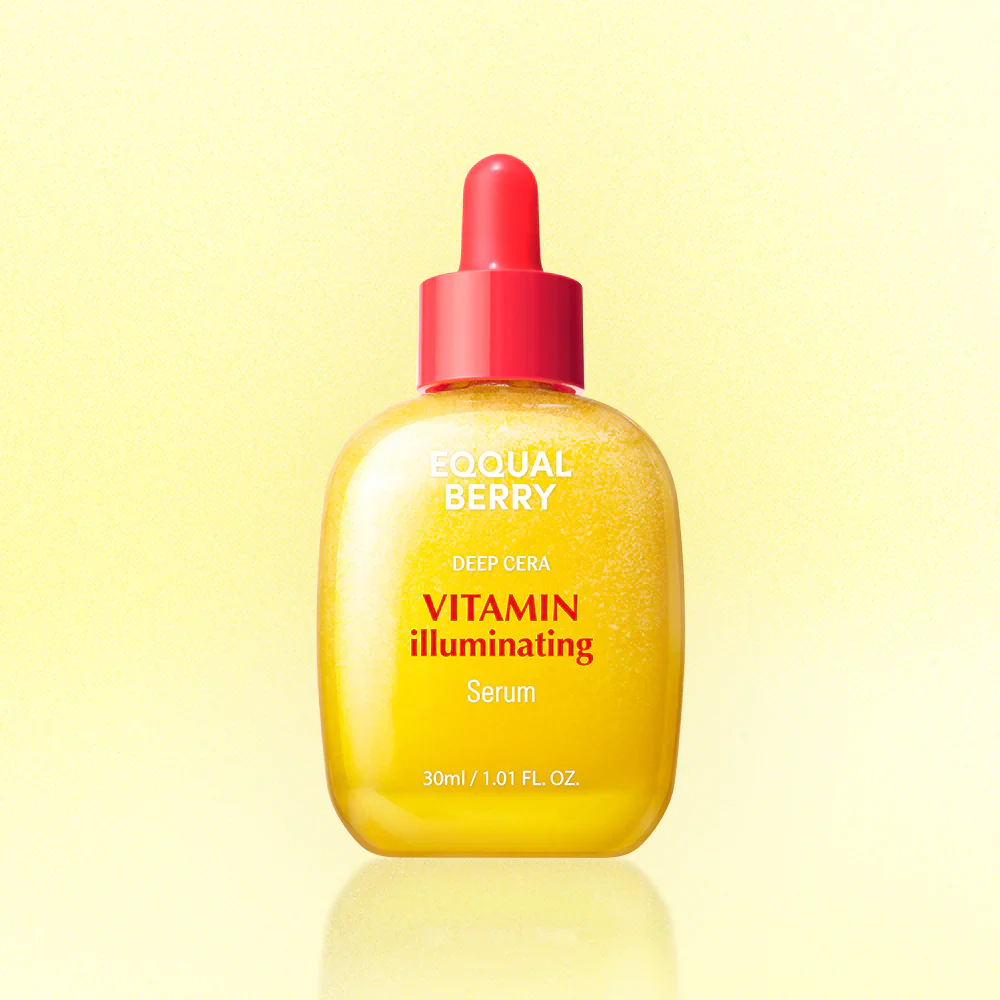
Eqqual Berry
Vitamin Illuminating Serum
30 mL · $24.99
A well-built niacinamide and arbutin brightening serum with solid hydration. The vitamin C angle in the marketing, in our view, goes beyond what the disclosed formula actually supports.
Brand Claims vs. the Science.
The official page positions this serum around 40% acerola water, 4% niacinamide, 2% arbutin, 5 ceramides, 8 forms of hyaluronic acid, "13 types of peptides," and the ability to improve melasma and dark spots in one week. Some of those claims hold up. Others are harder to verify from what is publicly available.
| Claim | What the evidence says |
|---|---|
| 4% niacinamide | Well-supported. Published literature backs 2-5% for barrier function, tone, and sebum regulation. |
| 2% arbutin brightening | Plausible. 2% is a credible cosmetic dose for tyrosinase inhibition and dark spot care. |
| 5 ceramides and barrier support | Supported by the INCI list, though likely at supportive rather than dominant levels based on list position. |
| 8 hyaluronic acid forms | Multi-HA systems genuinely improve hydration feel and surface plumping. Good claim. |
| "High vitamin C content" | The disclosed vitamin C derivative is only 10 ppm (0.001%). That is far below any effective-dose vitamin C study we found. |
| 13 types of peptides | Based on the publicly available INCI list we reviewed, we could not verify this claim from the disclosed ingredient names. |
| Improves melasma in 1 week | We could not find enough publicly available study methodology to independently assess the outcome percentages cited. Melasma is a chronic, relapsing condition. |
The realistic core of this product is gradual brightening plus hydration, driven mainly by niacinamide and arbutin.
Skincare science, not skincare noiseKey Ingredients, Honestly Assessed.
The full INCI list has 59 ingredients. Concentrations are only disclosed for a handful: acerola fruit water at 40%, niacinamide at 4%, arbutin at 2%, panthenol at 0.294%, tocopherol at 0.2%, and 3-O-ethyl ascorbic acid at 0.001%. For everything else, we work with position in the list and general formulation logic.
One of the best-supported skincare actives in published literature. At 4%, it sits within the research-backed range for barrier reinforcement, sebum reduction, tone evening, and post-inflammatory hyperpigmentation. This is the real workhorse of the formula.
A tyrosinase inhibitor used for dark spot reduction. At 2%, this is a credible cosmetic dose. Note: the INCI says "Arbutin," not "Alpha-Arbutin," and alpha-arbutin has cleaner clinical evidence. Likely effective regardless, but worth knowing.
Standard HA, hydrolyzed variants, crosspolymer forms, cationic and acetylated types. Collectively this builds strong surface hydration and a plumping, comfortable finish. Evidence is solid for hydration and comfort.
A strong multi-humectant stack. Glycerin is one of the best-researched skin moisturizers. Betaine can reduce irritation from more active ingredients. Hydroxyethyl urea adds extra water-binding for dehydrated skin.
Ceramide NP, NS, AS, AP, and EOP with cholesterol form a real barrier-lipid foundation. Squalane is a well-tolerated emollient with good barrier properties. These appear later in the list, suggesting supportive rather than dominant dosing.
A legitimate and stable vitamin C derivative in concept. The problem is the concentration. 0.001% is nowhere near what published brightening studies use. This cannot realistically function as a vitamin C treatment at this level, despite the "vitamin C serum" framing in the marketing.
Credible hyperpigmentation literature exists for topical tranexamic acid at 2-5%. This formula does not disclose the concentration and it appears deep in the list, so study-level efficacy is uncertain. Still potentially contributing.
A legitimate barrier-support ingredient, but 0.294% is below the 1%+ range highlighted in most barrier studies. Helpful, not a standout at this level.
A wide cast of antioxidants and anti-inflammatories. None have strong clinical data in leave-on face serums at cosmetic doses. Collectively they widen the reactivity surface for sensitive users, even though individually they are not problematic for most people.
Overall Formula Quality.
This is a competent formula with marketing that, in our view, overemphasizes the vitamin C angle. The actual backbone is solid: niacinamide and arbutin create a credible brightening core, and the multi-humectant and multi-HA systems deliver real hydration. The ceramide and lipid side adds barrier credibility. The formula is also meaningfully gentler than a classic low-pH ascorbic acid serum, which makes it more beginner-friendly than most "vitamin C" products.
The formula is strongest in three areas: pigment support from niacinamide and arbutin, hydration from the multi-humectant and multi-HA systems, and a degree of barrier comfort from the ceramide and lipid stack. These parts work together well. The vitamin C marketing layer is the part that does not match the disclosed formula.
No added fragrance, no alcohol denat, no essential oils in the disclosed INCI list. That is a genuine positive for irritation-prone skin. The softer consideration is the wide botanical cast: neem, turmeric, holy basil, acerola extract, and multiple berry extracts. None are automatic problems, but together they widen the potential reactivity surface compared to a simpler serum.
Who Is This Best For?
Normal, dry, or combination skin
Mild uneven tone, post-acne marks, general dullness
Beginners who want a gentler route into brightening
People who want something easier to tolerate than a classic low-pH vitamin C serum
People specifically looking for a true vitamin C serum
Melasma as a primary treatment. Better as an adjunct to a longer-term strategy.
Very clog-prone or Malassezia-prone skin. The richer ester profile may not suit everyone.
Pregnancy. Arbutin and tranexamic acid are both ingredients where clinician input is worth getting before regular use.
Transparency Concerns.
These are not reasons to avoid the product. They are things worth knowing when reading the marketing.
- The vitamin C emphasis vs. the INCI list. The serum is marketed with strong vitamin C language, but the only disclosed vitamin C derivative is 3-O-ethyl ascorbic acid at 0.001%. The vitamin C angle in the marketing does not appear to be matched by the disclosed formula.
- The peptide claim. The official page advertises "13 types of peptides + Niacinamide." Based on the publicly available INCI list we reviewed, we could not verify this claim from the disclosed ingredient names.
- Inconsistent acerola comparison figures. At the time of our review, the same page used two different numbers for acerola's vitamin C content vs. lemons in different sections. Minor, but worth noting when reading ingredient-science claims.
- One-week improvement language. We could not find enough publicly available study methodology to independently assess the outcome percentages cited for melasma. Melasma is a chronic condition. Dermatologist guidelines consistently put long-term photoprotection above quick-fix claims.
Layering and Routine Tips.
Because this serum is gentler than a classic low-pH vitamin C formula, it layers well with most other products.
Since this product is not functioning as a traditional vitamin C serum, you can actually pair the two. Use a real vitamin C (like a 10-15% L-ascorbic acid) in the morning and this one in the evening.
Niacinamide and arbutin are both retinoid-compatible. If you are new to retinoids, alternate nights. Experienced users can layer them without issue.
Possible, but do not stack too many exfoliating actives at once. If you are already using salicylic acid or glycolic acid, add this on separate nights first and see how your skin responds.
Pigment-targeting actives like niacinamide, arbutin, and tranexamic acid all work better when you are protecting against the UV exposure that drives discoloration in the first place. Sunscreen every morning, no exceptions.
Final Verdict.
This is a decent product, just not for the reason the marketing suggests.
The formula's real strengths are the 4% niacinamide, 2% arbutin, a strong multi-humectant base, and good barrier-support ingredients. That combination makes it a solid brightening option for beginners, mild discoloration, and people who want something gentler than a classic low-pH vitamin C formula.
In our view, the vitamin C angle in the marketing overemphasizes what the disclosed formula actually delivers. The peptide messaging could not be verified from the published INCI list. And based on available evidence, we would not expect dramatic one-week results for melasma.
A well-built niacinamide and arbutin brightening serum with good hydration and decent barrier support, with marketing that in our view overemphasizes the vitamin C angle. Good for beginners and mild discoloration. Not our first pick if you specifically want a high-potency vitamin C treatment, a minimal sensitive-skin formula, or a stronger pigmentation-focused routine.
With love,
Stylishandhealthy
This post is for informational purposes only and does not constitute medical advice. If you have concerns about a skin condition, medication interactions, or pregnancy, please consult a board-certified dermatologist or qualified healthcare professional. Affiliate links on this site are always disclosed. We only recommend products we believe in.
Sources
- [1] Eqqual Berry official product page. eqqualberryglobal.com
- [2] Cosmetic Ingredient Review (CIR). Safety assessment of niacinamide. PMID: 22499721
- [3] Levin J, Momin SB. How much do we really know about our favorite cosmeceutical ingredients? J Clin Aesthet Dermatol. PMC6098779
- [4] SCCS Opinion on arbutin in cosmetics. EC Cosing safety assessment.
- [5] Bissett DL. Niacinamide: a multifunctional skin care ingredient. Br J Dermatol.
- [6] Harding CR. The stratum corneum: structure and function in health and disease. Dermatol Ther.
- [7] Cosmetic Ingredient Review. Safety assessment of glycerin. CIR Report.
- [8] Fiume MM et al. Safety assessment of 1,2-glycols as used in cosmetics. Int J Toxicol.
- [9] SCCS Opinion on 3-O-ethyl ascorbic acid. EC Health.
- [10] Sarkar R et al. Topical tranexamic acid as a promising treatment for melasma. J Clin Aesthet Dermatol. PMC5605218
- [11] Pillaiyar T et al. Skin whitening agents: medicinal chemistry perspective. J Enzyme Inhib Med Chem. PMID: 27213821
- [12] Breathnach AS. Melanin hyperpigmentation of skin: melasma, topical treatment with azelaic acid. J Dermatol Treat.
- [13] Lynde CW et al. Moisturizers and ceramide-containing formulations. Skin Therapy Lett.